Turnaround Time: Protecting the Gap Between Departure and Arrival
Turnaround is the time between one guest leaving and the next arriving. On a grass tent pitch it is almost nothing. On a lodge with a hot tub it can be most of a day. The trouble starts when the booking system does not know the difference and cheerfully sells an arrival two hours after a departure.
What actually has to happen
A static or lodge needs cleaning, beds stripped and remade, bathrooms done, bins emptied and a check that nothing is broken. A glamping unit with a hot tub adds draining, scrubbing, refilling and reheating — and reheating alone can take several hours before the water is anywhere near usable.
None of that is negotiable, and none of it goes faster because a guest is standing at the gate.
The cost of getting it wrong
Sell the gap and you have three bad options: rush the clean, hand over a unit that is not ready, or ring the incoming guest and move them. The first damages your reviews, the second damages them faster, and the third costs you the booking and probably the guest.
It is worth being blunt about the maths. A single one-star review mentioning a dirty pod or a cold hot tub will cost more in lost bookings than the one night you gained by squeezing the turnaround.
Set it per unit, not per site
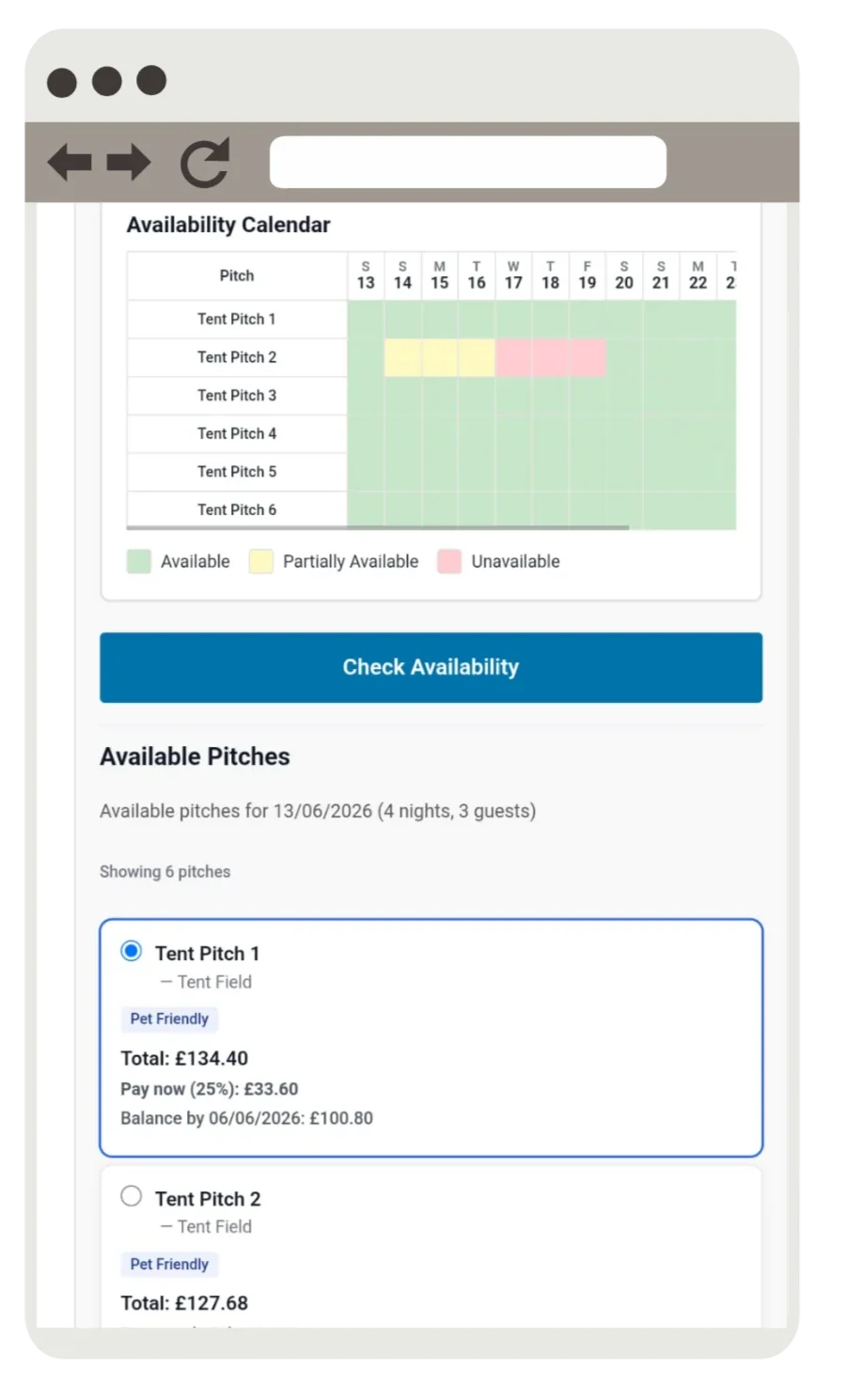
A blanket rule is too crude. Tent pitches might need an hour, statics half a day, and a hot tub lodge a full day in winter when the water takes longer to heat. Set the turnaround each unit actually needs and let the booking system block that window automatically, so the next arrival can never land inside it.
Done properly this is invisible. The guest simply does not see those dates offered, there is no conversation to have, and nobody has to remember.
Changeover days do half the job
If your holiday homes run on fixed changeover days in peak season, turnaround is largely solved for those weeks — everything goes out in the morning and comes in during the afternoon, and your cleaning team knows exactly where to be. The protection matters most out of season, when short breaks mean units can turn around on any day of the week.
Give your team the list
Protecting the window only helps if the people doing the work know what is turning around today. An arrivals and departures list on a phone, showing which units are going out, which are coming in and which need a hot tub started, turns turnaround from a scramble into a routine.
Our campsite management software shows the day’s departures and arrivals side by side, so the team can see what needs turning around before the first car appears.
Frequently asked questions
What is turnaround time?
The protected gap between one guest departing and the next arriving, used for cleaning, restocking and resetting a unit. It is set per unit and blocked automatically so the next booking cannot land inside it.
How long should a hot tub turnaround be?
Longer than most people expect. Draining, cleaning, refilling and reheating a tub commonly takes most of a day, and longer in winter when the water starts colder. Many sites block a full day between stays on hot tub units.
Should turnaround be the same for every pitch?
No. A grass tent pitch may need an hour while a lodge with a hot tub needs a full day. Set the window each unit genuinely needs rather than applying one figure across the site.
Do changeover days remove the need for turnaround time?
In peak weeks they largely do, because everything turns around on the same day. Out of season, when short breaks mean units change over on any day, a protected turnaround window still matters.