Seasonal and Dynamic Pricing for Campsites: How It Works
Seasonal pricing sets different rates for different times of year — peak, shoulder and off-peak — while dynamic pricing adjusts rates based on demand, day of week, or how full you are. Used together in your booking system, they help fill quiet periods and earn more in peak, automatically once set up.
What is seasonal pricing?
Seasonal pricing means charging more during busy periods such as school holidays and bank holidays, and less in quiet weeks. It reflects what guests will pay at different times and protects your best dates from being sold too cheaply.
What is dynamic pricing?
Dynamic pricing goes a step further, nudging rates up as you fill and offering value on slower dates or midweek stays. The aim is to sell more pitches overall, not just to raise prices — a quiet Tuesday booked at a fair rate is better than an empty one.
How do you set it up without overcomplicating it?
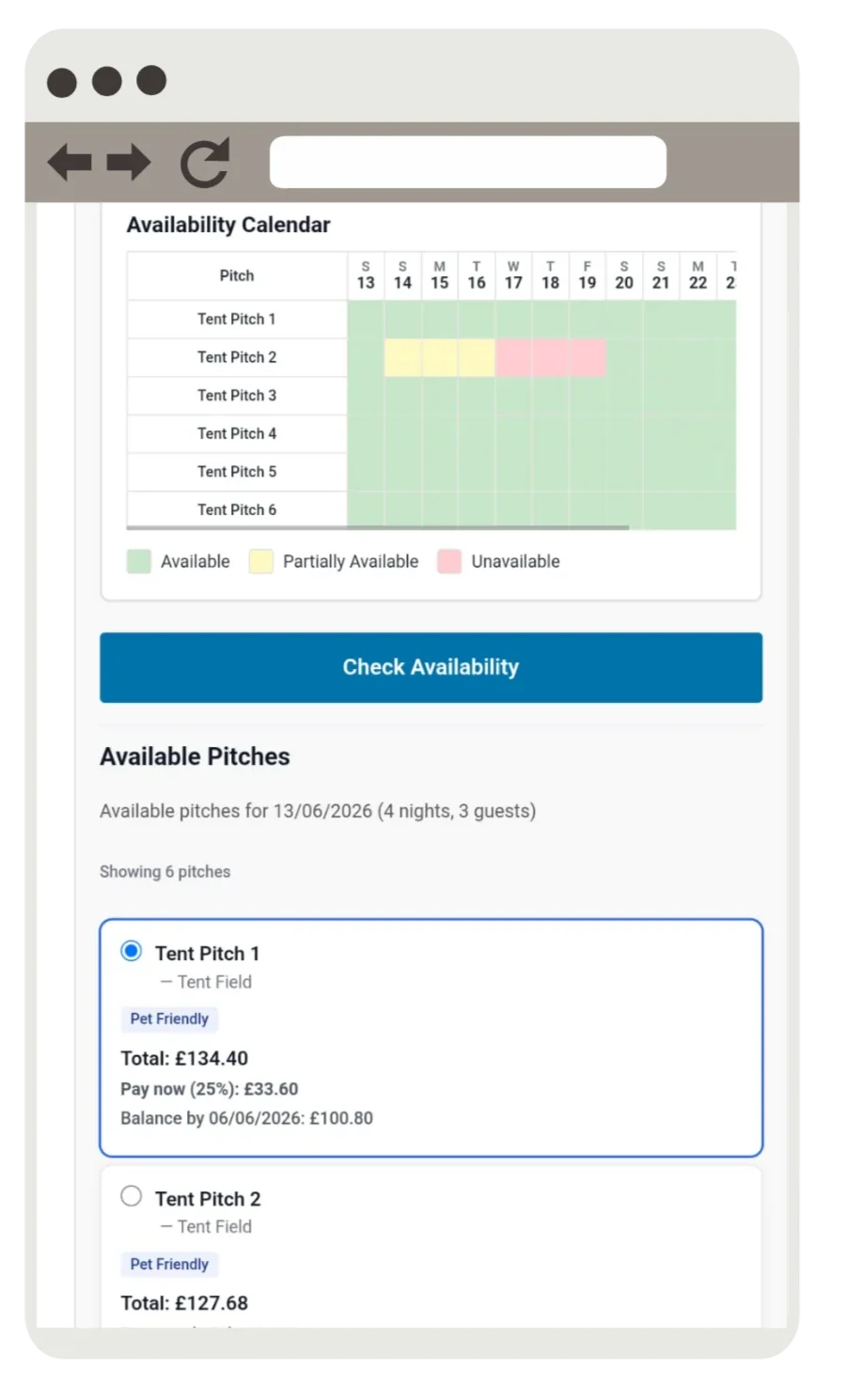
Start simple: define two or three seasons and set a clear rate for each pitch type. Once that is running smoothly, add midweek or last-minute adjustments. A good booking system applies these rules automatically at the point of booking. You can try the live demo to see pricing in action.
Does it actually increase revenue?
For most sites, yes — by capturing more for in-demand dates and filling quiet ones that would otherwise sit empty. The key is to keep rules simple enough to manage and let the system do the work at booking time.
Frequently asked questions
What is seasonal pricing for campsites?
Seasonal pricing charges different rates at different times of year — higher in peak periods like school and bank holidays, lower in quiet weeks — so your best dates are not sold too cheaply and quiet weeks stay attractive.
What is dynamic pricing for a campsite?
Dynamic pricing adjusts rates based on demand, day of week or how full you are, nudging prices up as you fill and offering value on slower dates, with the aim of selling more pitches overall.
How do I set up seasonal pricing without it getting complicated?
Start with two or three seasons and a clear rate per pitch type. Once that runs smoothly, add midweek or last-minute adjustments. A good booking system applies the rules automatically at booking.
Does seasonal and dynamic pricing increase revenue?
For most sites, yes, by capturing more on in-demand dates and filling quiet ones that would otherwise be empty. The trick is keeping the rules simple enough to manage.